The Cost of Immediate Intent vs. Long-Term Trust: Google Ads provides instant visibility and direct lead generation but operates on a high-cost-per-click model, whereas SEO requires time to mature but fundamentally builds the trust and remarketing pools essential for sustainable growth.
The 7-Touchpoint Conversion Reality: Generating a direct lead via paid advertising is only the beginning; converting that lead into a customer requires immense patience and at least seven distinct touchpoints, making the trust established through organic SEO an indispensable asset.
The AI Search Revolution: The global integration of Search Generative Experience (SGE) in 2026 makes advanced SEO strategies like Generative Engine Optimisation and Answered Engine Optimisation critical, as users increasingly rely on AI Overviews to provide compiled, authoritative answers.
The 2026 Economic and Marketing Landscape for Selangor SMEs
As the global digital economy advances into 2026, Small and Medium Enterprises (SMEs) operating within Selangor find themselves navigating an increasingly complex and high-pressure operational environment. The foundational survival strategies that characterized the immediate post-pandemic era are no longer sufficient to guarantee sustained commercial growth or market visibility. In 2026, the SME sector is confronting what industry analysts describe as a “triple threat” of structural demands. This threat matrix includes an increasingly stringent compliance economy characterized by mandatory e-invoicing and ESG reporting, persistent liquidity squeezes, and a significant execution deficit in adopting advanced digital transformations.
Within this highly constrained economic ecosystem, business operators face rising operational costs, including a projected 16% inflation rate in employee medical benefits, forcing companies to maximize efficiency in every department. Consequently, the allocation of marketing capital requires extreme precision and rigorous justification. Marketing is no longer viewed by mature organizations as a discretionary expenditure or a mere exercise in brand visibility; rather, it is recognized as an essential, measurable, and highly interconnected lever for corporate survival and revenue generation. The era of treating digital marketing as a fragmented collection of isolated tactics—such as publishing sporadic social media updates or running unoptimized boosted posts—has definitively ended.
The central inquiry for enterprise leaders and marketing directors in Selangor centers on customer acquisition efficiency: Which digital marketing strategy delivers the highest, most sustainable Return on Investment (ROI)? Historically, this analytical debate has pitted Search Engine Optimization (SEO) against pay-per-click (PPC) advertising, specifically the Google Ads platform. However, a rigorous examination of market data, consumer psychology, and algorithmic shifts in 2026 reveals that treating these methodologies as mutually exclusive is a fundamental miscalculation.
The decision regarding which avenue to prioritize depends entirely on a business’s specific marketing objective, overarching corporate goal, and available capital budget. For Google Ads and SEO, they are fundamentally rooted in the exact same strategic premise: they are designed to show up to those users who exhibit high intention and are firmly situated within the consideration stage of the purchasing funnel. However, there is a profound difference in terms of the psychological mechanisms of closing the sale and the underlying financial costing models associated with each channel. This comprehensive report provides an exhaustive, data-driven analysis of both frameworks, contextualized within the 2026 Malaysian digital economy, to determine optimal ROI pathways and systemic integrations for Selangor enterprises.
The Shared Foundation: High-Intention and the Consideration Stage
Before dissecting the sharp divergences between organic search visibility and paid advertising, it is critical to understand their shared architectural foundation. Both Google Ads and SEO are categorized as inbound marketing strategies, a methodology engineered specifically to capture pre-existing market demand rather than attempting to artificially generate it.
Unlike traditional outbound marketing methods—such as television broadcasting, unprompted social media interruption advertising, or unsolicited cold outreach—which attempt to generate interest by disrupting a consumer’s attention, search engine marketing positions a brand directly in the digital path of a consumer who is actively seeking a highly specific solution. When a procurement manager in Petaling Jaya enters the query “commercial structural engineering consultant Selangor” into a search engine, their commercial intention is unequivocally high. They are not passively browsing for entertainment; they are actively seeking a specialized service provider to resolve an immediate, high-stakes corporate requirement.
Both the sponsored Google Ads placements that occupy the apex of the Search Engine Results Page (SERP) and the organic SEO listings positioned immediately beneath them are presented to this exact, high-intent user. In this critical regard, both strategies are fundamentally aligned. They successfully intercept the user during the highly lucrative consideration stage of the buyer’s journey. The variance in overall ROI, therefore, does not stem from who these respective strategies are targeting. The variance stems from how the search platform charges the business for facilitating the interaction, the chronological timeframe required to achieve dominant visibility, and the psychological readiness of the end-user to finalize a financial transaction upon the very first digital encounter.
Google Ads: The Mechanics of Immediate Action and High Costing
Google Ads functions as a high-speed digital accelerator, providing immediate market visibility, highly predictable demand capture, and instantaneous data feedback. For organizations that require an immediate influx of lead generation to sustain cash flow or to capitalize on highly seasonal market trends, paid search offers unparalleled speed of deployment. A comprehensive campaign can be conceptualized, constructed, funded, and launched within a matter of hours, placing an unknown brand at the very top of global search results almost instantaneously. However, this immediacy and guaranteed placement command a significant financial premium.
The Dynamics of Cost-Per-Click (CPC)
Google Ads operates entirely on a Pay-Per-Click (PPC) auction model. In this ecosystem, advertisers do not pay for impressions—meaning they are not charged when their advertisement is merely displayed on the screen. Instead, a financial charge is incurred only when a prospective user physically clicks the advertisement and is subsequently directed to the designated landing page. This direct, transactional cost structure means that Google Ads requires a continuous, linear, and often escalating injection of capital. The exact moment the daily or monthly advertising budget is exhausted, the brand’s visibility within the sponsored placements ceases entirely, effectively functioning as a “rented” high-traffic digital storefront.
In 2026, the financial cost of acquiring this rented visibility has escalated significantly across the globe, driven by an influx of digital competition and increasingly sophisticated automated bidding algorithms. Keywords that exhibit strong commercial intent—such as “hire a lawyer” or “B2B software quote”—are subject to intense, real-time bidding wars among industry competitors, driving up the average CPC to unprecedented levels. High-lifetime-value industries, recognizing the lucrative nature of a closed deal, are willing to pay an extraordinary premium for a single click.
The following table illustrates the projected average CPC benchmarks across various high-value industries globally, which directly influences the localized auction dynamics within the Malaysian market:
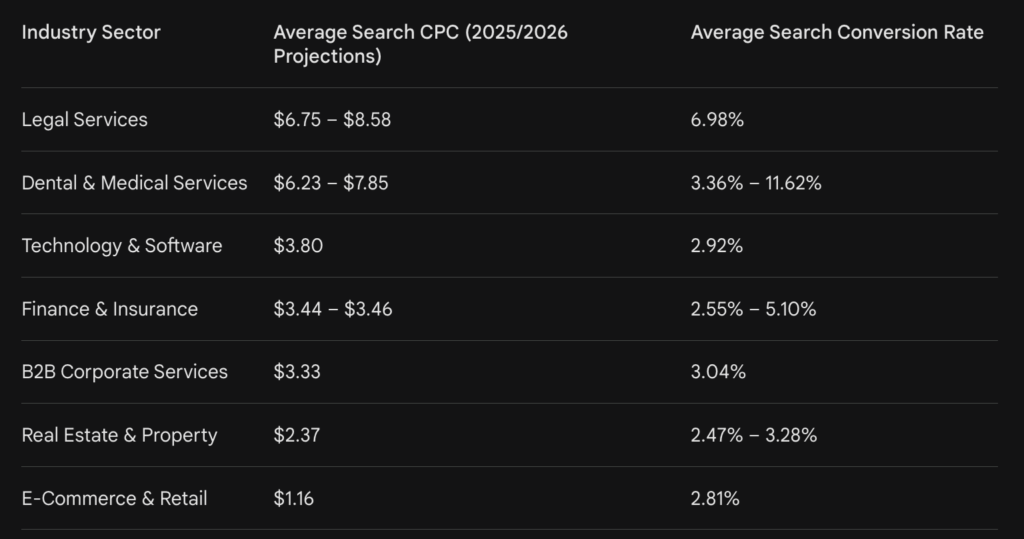
Data compiled from comprehensive global benchmarking indices analyzing search performance.
Within Malaysia specifically, digital advertising costs remain relatively competitive when juxtaposed against Tier 1 advertising markets such as the United States (which maintains an average CPM of $23.00 and CPC of $2.69) or Australia. The overall average CPC across combined platforms in Malaysia hovers around a much lower median of $0.55, making it highly accessible for broad campaigns.
However, this national average is heavily diluted by low-cost, low-intent consumer goods queries. For Selangor-based SMEs operating within highly competitive B2B sectors, specialized manufacturing, or professional services, the actual CPC experienced in daily auctions is substantially higher. The Malaysia advertising market size is projected to reach $4,150.6 Million by 2034, with digital formats already accounting for 76% of total advertising revenue. As more traditional marketing budgets pivot toward programmatic and automated search buying, the cost of generating a single click via Google Ads will continue its upward trajectory, squeezing the profit margins of enterprises that rely exclusively on this channel.
Direct Conversion and the Illusion of the Instant Sale
The primary, undeniable allure of the Google Ads platform is its capacity to directly convert users into tangible business leads. Because the advertisement strategically targets users who are experiencing an immediate problem, the likelihood of a direct conversion upon the first website visit is statistically elevated compared to top-of-funnel awareness channels like display advertising. For an emergency HVAC repair service, a user clicking an ad is highly likely to make an immediate phone call.
However, a fundamental misunderstanding of modern consumer psychology often distorts ROI expectations for complex products or high-value B2B services. Google Ads is highly proficient at directly converting the user to become a lead—perhaps capturing an email address or securing a preliminary consultation request. Yet, for complex transactions, a lead is not a closed sale. The costing is high precisely because Google charges based on the CPC, demanding an immediate financial outlay for what is often only the beginning of a prolonged relationship.
The 7-Touchpoint Reality: Why Direct Leads Require Patience
To accurately calculate the ROI of any digital marketing endeavor in 2026, businesses must abandon the antiquated notion of a linear, single-interaction sales funnel. Modern marketing analytics unequivocally demonstrate that navigating a prospect from a state of initial brand awareness to a finalized, revenue-generating purchase requires a complex, multi-layered journey.
Statistical models and comprehensive industry research indicate that for one acquired lead to successfully become a paying customer, it will require an average of 7 distinct touchpoints. In the realm of B2B transactions, this complexity is further magnified; the average B2B purchase now involves 6.8 different stakeholders within the purchasing organization, each of whom must be convinced of the vendor’s value proposition.
The 7 essential touchpoints that characterize a successful digital marketing conversion sequence typically unfold as follows:
Awareness (The Entry Point): The precise moment a prospect learns that a specific brand exists. This is frequently facilitated by a high-cost Google Ad, an organic search result, or a social media referral.
Consideration & Research: The analytical process by which the prospect determines whether the brand possesses the capability to solve their specific pain point. This involves deep navigation of the website’s service pages and technical specifications.
Validation & Trust Building: The prospect actively seeks external validation, scrutinizing case studies, reading third-party reviews, and evaluating the brand’s overall digital authority to mitigate perceived risk.
Education & Value Exchange: The prospect deepens their understanding of the proposed solution, often exchanging their contact information for high-value gated content, such as an interactive assessment tool, a detailed whitepaper, or a proprietary industry report.
Direct Engagement: The prospect initiates formal contact, submitting a tailored inquiry, requesting a customized quotation, or scheduling a preliminary consultation.
Nurturing & Re-engagement: The critical phase of ongoing, automated communication. Because 98% of website visitors do not fill out a form upon their initial visit, sophisticated remarketing campaigns and AI-driven personalized email sequences are deployed to maintain brand salience.
Conversion (The Purchase Decision): The culminating touchpoint where the prospect, now fully educated and possessing a high degree of trust in the brand, finalizes the commercial transaction and officially becomes a customer.
When analyzing this intricate journey, it becomes immediately apparent why relying solely on paid advertising presents a significant financial hazard. A Google Ad click generally facilitates only the very first touchpoint (Awareness) or, in cases of hyper-urgent intent, the final touchpoint (Conversion). However, for the vast majority of standard commercial leads, securing the initial contact information is insufficient.
Therefore, for leads generated via Google Ads to successfully become long-term customers, an immense amount of patience and systemic trust is required. If a business pays a premium CPC to acquire a lead but lacks the sophisticated content architecture, automated nurturing sequences, and digital authority required to facilitate the subsequent six touchpoints, that initial investment is highly likely to be squandered. This realization forces sophisticated Selangor SMEs to look beyond the immediate gratification of PPC and toward the sustainable mechanics of organic search.
Google SEO: The Compounding Engine of Trust and Remarketing
If Google Ads functions as a high-speed accelerator that demands continuous financial fuel, Google SEO is a compounding engine designed for sustainable, long-term operational growth. SEO Marketing involves the meticulous, strategic alignment of a website’s underlying technical infrastructure, its internal content architecture, and its external digital authority signals to rank highly in organic, non-sponsored search results.
The fundamental economic differentiator between the two strategies is profound: when a user clicks on an organic search result, the business incurs absolutely zero direct financial cost from the search engine.
The Economics of Digital Equity and the Pricing of SEO
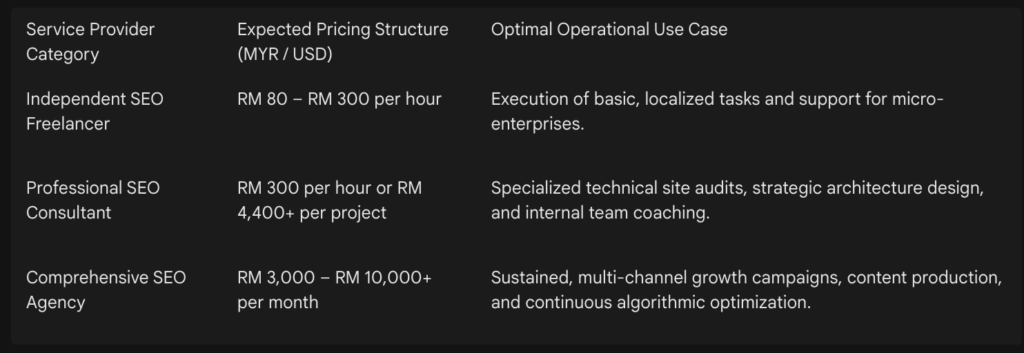
Investing in professional SEO is analogous to acquiring and developing prime digital real estate. Unlike the transient, “rented” visibility provided by Google Ads, a well-executed SEO strategy builds permanent digital equity. By creating highly optimized, authoritative content and establishing a robust profile of high-quality backlinks, a business constructs an owned asset that continuously generates value over time. While the initial capital outlay required to engage a specialized SEO Consultant Selangor or a full-scale agency can be significant, the marginal cost of acquiring each additional organic visitor drops precipitously toward zero as rankings stabilize and domain authority increases.
In the 2026 Malaysian market, the financial commitment required to execute a professional SEO campaign varies considerably based on the scope of the engagement, the technical complexity of the website, and the competitive density of the specific industry. Based on aggregated digital marketing economic data, Selangor SMEs can anticipate the following standard pricing structures:
Building Trust and Cultivating Remarketing Pools
The primary function of an advanced SEO strategy in 2026 extends far beyond the mere acquisition of raw website traffic; Google SEO is fundamentally a process to build trust. Modern consumers are highly digitally literate; they inherently recognize the visual and psychological distinction between a sponsored advertisement that a company paid to display and an organically earned ranking that an algorithm determined to be the most relevant, high-quality answer available. A dominant position at the top of the organic SERP serves as an implicit, algorithmic endorsement of a brand’s credibility.
However, recognizing the realities of the aforementioned 7-touchpoint customer journey, businesses must accept a universal truth regarding organic traffic: when the user jumps into your website for the very first time via an organic search result, they might not be purchasing from you immediately. A user conducting preliminary research on “sustainable packaging manufacturers in Malaysia” is in the early stages of consideration. They are gathering intelligence, evaluating options, and identifying potential vendors.
While the immediate conversion rate of this first organic visit may be low, the interaction is of immense strategic value. From time to time, through the consistent publication of authoritative content and high-ranking resources, you are steadily building profound market trust. Crucially, you are also building the remarketing pools for your business.
By deploying privacy-compliant tracking pixels, advanced analytics configurations, and website visitor identification software, a business can capture data on these organic visitors. This allows the enterprise to continuously retarget these users across other digital platforms—such as displaying relevant banner ads on industry news sites or serving targeted video content on social media feeds. The organic SEO visit acts as the vital, low-cost mechanism that fills the top of the marketing funnel, creating the highly qualified audience pool required to efficiently execute the subsequent touchpoints necessary for final conversion.
SEO ROI Projections and Timelines
The primary obstacle associated with SEO adoption is its temporal delay. In stark contrast to the immediate gratification provided by paid search campaigns, meaningful financial returns on SEO investments typically require a maturation period of between six to twelve months following initial implementation. However, once algorithmic momentum is established, the ROI scaling is mathematically unparalleled in the digital marketing sphere.
Data tracking high-ticket industries demonstrates that the long-term returns generated by SEO consistently outpace paid media as the cost of organic acquisition stabilizes while PPC costs continue to inflate. A comprehensive analysis of mature SEO campaigns reveals the following ROI benchmarks:
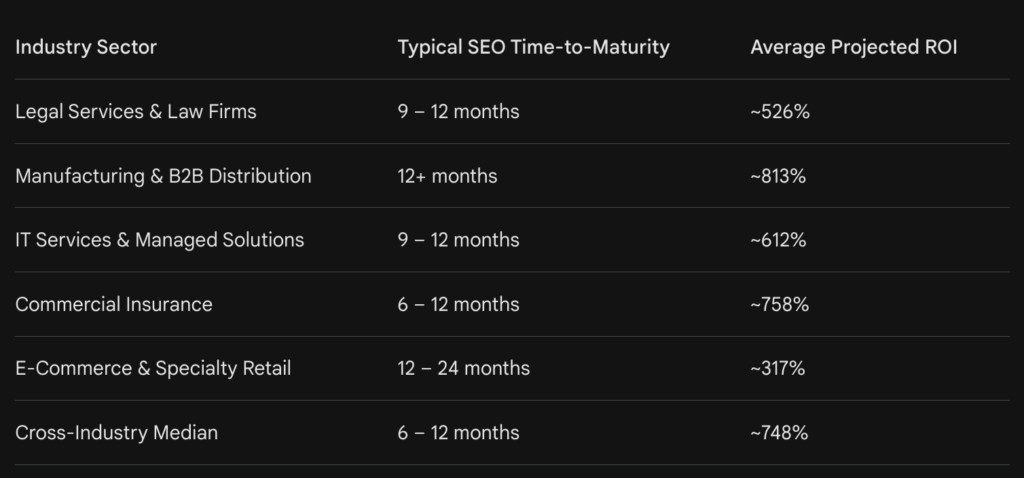
Statistical aggregation of mature SEO campaigns detailing long-term yield.
These figures illustrate that while SEO demands upfront patience, its capacity to lower the blended cost-per-lead over a multi-year horizon makes it the most financially prudent investment for sustainable SME growth in Selangor.
The AI Breakthrough: SGE, GEO, and AEO
While the traditional debate between SEO and Google Ads has focused on CPC and organic blue links, any comprehensive ROI analysis conducted in 2026 is fundamentally incomplete if it fails to account for the catastrophic disruption caused by Artificial Intelligence within global search ecosystems. Search engines have irrevocably evolved. They are no longer simple directories acting as “librarians” that merely point users toward relevant external websites; they have transformed into complex, conversational “researchers” that actively synthesize information directly on the search results page.
The Impact of the Search Generative Experience (SGE)
Google’s Search Generative Experience (SGE), which transitioned from a beta pilot program into a fully integrated global feature known as “AI Overviews” by 2026, represents a seismic shift in how consumer information is processed and delivered. When a user submits a complex, multi-part query, the search engine utilizes advanced Large Language Models (LLMs)—such as Gemini—to dynamically generate a comprehensive, highly synthesized answer that occupies the most prominent digital real estate at the very top of the SERP.
This technological evolution has created an environment characterized by a dramatic increase in “zero-click searches.” Because the user’s inquiry is thoroughly and satisfactorily resolved within the AI Overview itself, the necessity for the user to click through to an external website is drastically reduced. Industry tracking metrics from 2026 indicate that organic Click-Through Rates (CTR) for broad, top-of-funnel informational queries have plummeted by as much as 60% to 68% in certain sectors due to this phenomenon.
However, this systemic shift presents an unprecedented opportunity and an additional massive benefit for SEO. When users are searching for answers in Google, the AI Overview will tend to share with them a compiled article as the definitive answer. Right now, a rapidly growing majority of users inherently rely on the AI to filter out low-quality information and present them with the absolute truth. When a user does choose to click through an AI Overview to the source material cited by the LLM, their commercial intent is exceptionally high. They have already consumed the AI’s summary and are proactively seeking a deeper, more authoritative engagement with the subject matter. This constitutes a monumental breakthrough and a unique benefit for adopting an advanced, forward-looking approach to SEO.
Generative Engine Optimisation and Answered Engine Optimisation
To successfully capitalize on this AI-driven landscape and secure visibility within these lucrative AI Overviews, traditional SEO methodologies must be aggressively augmented with Generative Engine Optimisation (GEO) and Answered Engine Optimisation (AEO).
Generative Engine Optimisation is the highly specialized practice of structuring digital content and managing a brand’s online presence to specifically influence how LLMs retrieve, summarize, and cite information. Venture capital analysts describe this as a fundamental paradigm shift; while traditional SEO was built primarily on acquiring hyperlinks, GEO is built fundamentally on language processing and entity comprehension. Traditional ranking signals—such as backlink velocity, domain authority, and technical site architecture—remain foundational prerequisites, but they are no longer sufficient to guarantee visibility in an AI-powered search system.
To excel in GEO, content must exhibit profound “Information Gain.” AI models are actively trained to bypass repetitive, rehashed content and instead favor original research, proprietary datasets, unique organizational perspectives, and hyper-specific, localized case studies. Content that is GEO-optimized has been shown to achieve a 40% higher likelihood of receiving an AI citation compared to standard, legacy SEO content.
Simultaneously, Answered Engine Optimisation ensures that this high-value content is structurally formatted to be effortlessly extracted and synthesized by machine learning algorithms. This highly technical process involves deploying specific “answer capsules” at the top of web pages, utilizing advanced schema markup and structured data, and formatting complex ideas into concise, machine-readable syntax without sacrificing human readability. Securing a citation within an AI Overview is the 2026 equivalent of ranking in the number one organic position a decade ago. It establishes the ultimate form of digital trust and frequently results in a massive surge of direct brand searches.
Strategic Synergy: Integrating Google Ads and SEO for Maximum ROI
Upon rigorous review of the data, it is unequivocally clear that viewing Google Ads and SEO as adversarial, mutually exclusive strategies is an analytical failure. We cannot deny that both strategies are not only suitable but absolutely essential for a comprehensive digital dominance strategy. Relying exclusively on one channel leaves an enterprise highly vulnerable to algorithmic volatility or budget depletion.
For maximum ROI, the most sophisticated SMEs in Selangor are deploying interconnected, holistic marketing systems where these two channels operate in perpetual synergy. Both strategies actually can, and must, work together.
1. Data Validation and The Feedback Loop:
Google Ads provides immediate, highly accurate quantitative data regarding which specific keywords, search phrases, and localized terms actually result in commercial conversions. A business can deploy a targeted, moderate Google Ads budget as an agile testing ground to identify the most lucrative search terms within the Selangor market. Once these high-converting keywords are statistically validated, the data is handed over to the SEO team. The SEO team then engineers long-term, organic, GEO-compliant content targeting those exact terms, effectively building the assets required to eventually replace the expensive paid clicks with high-margin organic traffic.
2. Comprehensive Full-Funnel Coverage:
As established, for SEO, you are meticulously building trust, establishing early touchpoints, and feeding the critical remarketing pools that sustain long-term growth. SEO captures users at the beginning of their journey, educating them and validating their concerns. Conversely, Google Ads is precision-targeted for those users who lack only 1 last push to direct purchase with you. By running both simultaneously, an SME ensures they are capturing the researcher today while securing the desperate, ready-to-buy consumer tomorrow.
3. Dominating SERP Real Estate and AI Synergy:
In highly competitive metropolitan areas across Selangor, appearing in both the sponsored advertisement section and the organic listings exponentially increases a brand’s perceived authority and overall share of voice. Furthermore, groundbreaking data from 2026 reveals a profound interconnectedness within the AI search environment. While traditional search ads have seen declining engagement, “Sponsored” links that appear within an AI Overview experience an astonishing 91% higher Click-Through Rate when the brand is also cited organically within the AI’s synthesized summary. This conclusively proves that the organic trust built through SEO directly and measurably subsidizes the efficiency and conversion rate of paid advertising.
Executing the Architecture: Budgeting for 2026
For business operators in Selangor, establishing this dual-engine architecture requires deliberate, methodical execution based on available capital:
For Budgets RM 4,000 – RM 8,000 per Month: Capital should be heavily weighted toward Google Ads or Local Service Ads to ensure immediate cash flow, lead generation, and business survival. Simultaneously, fundamental, low-cost Local SEO tasks (such as optimizing Google Business Profiles and rectifying technical site errors) should be executed in the background.
For Budgets RM 12,000 – RM 20,000 per Month (The Strategic Sweet Spot): A balanced, integrated approach is mandated. Google Ads is utilized to drive immediate, high-intent leads and validate conversion data, while a substantial portion of the budget is allocated to professional Marketing consultation and comprehensive SEO to build out the content architecture and secure AI citations.
For Budgets RM 20,000+ per Month: The strategy should aggressively pivot toward scaling SEO as the primary, long-term lead generation engine to systematically lower the overall blended cost per acquisition. Google Ads is then utilized strategically for highly specific, seasonal spikes, aggressive retargeting of the organic pool, or competitive conquesting.
Conclusion
The digital marketing paradigm in 2026 demands a highly sophisticated, multi-faceted operational approach. The debate regarding which strategy yields a better ROI is resolved not by selecting a victor, but by understanding their distinct roles within a unified revenue system.
Google Ads remains the premier mechanism for immediate demand capture. It effectively targets users requiring the final push toward a direct transaction, albeit at a high and continually escalating cost-per-click. Conversely, SEO serves as the foundational bedrock of a resilient digital enterprise. It is a meticulous process engineered to build trust, establish the numerous critical touchpoints required for complex conversions, and construct highly targeted remarketing pools. While it demands patience and upfront investment, the compounding ROI of SEO—particularly when adapted for the revolutionary realities of the Search Generative Experience and Generative Engine Optimisation—is mathematically unmatched by any paid channel.
Ultimately, businesses that rely exclusively on fragmented, outdated strategies will systematically lose market share to competitors who embrace connected, data-driven systems. The brands that will secure dominance in the Selangor market in 2026 are those that leverage paid media for speed and tactical intelligence, while simultaneously investing deeply in the organic, linguistic authority required to train the world’s emerging AI answer engines.
If you are looking forward for someone to bring your SEO to another level, we are here to help.